Why Spreadsheets Break Once You Pass 10 Applicants (And What Small Teams Do Instead)
Thu Aug 20 2026
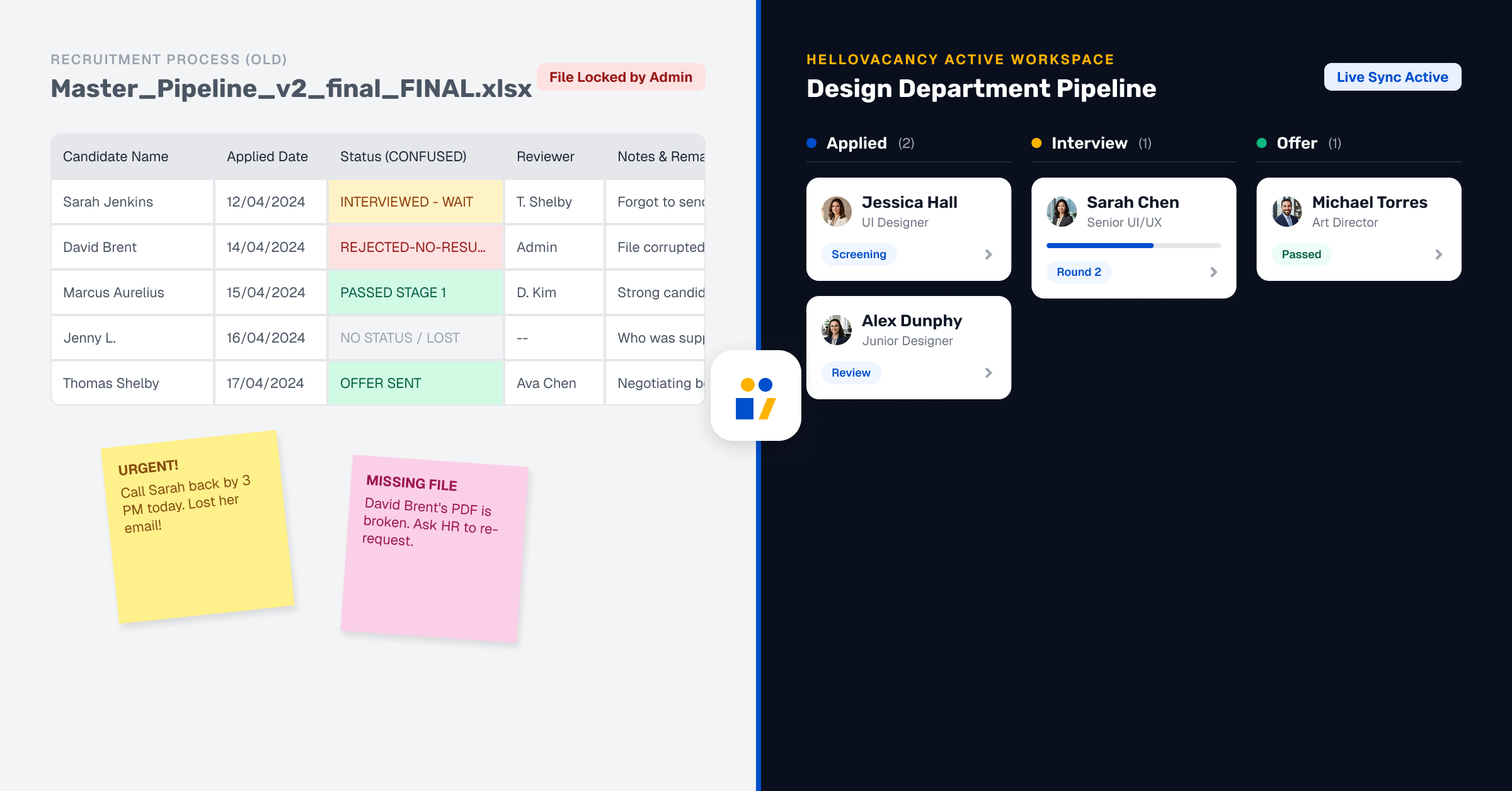
Most small teams start hiring with a spreadsheet. It's free, everyone already knows how to use it, and for the first handful of applicants, it's genuinely fine.
Then you post a second job. Applications start landing in three different places — email, a Google Form, someone's LinkedIn DMs — and you're manually copying each one into a row. By the time you've got 10-15 candidates across two roles, the spreadsheet isn't tracking your hiring process anymore. It's a part-time job of its own.
Where it actually breaks
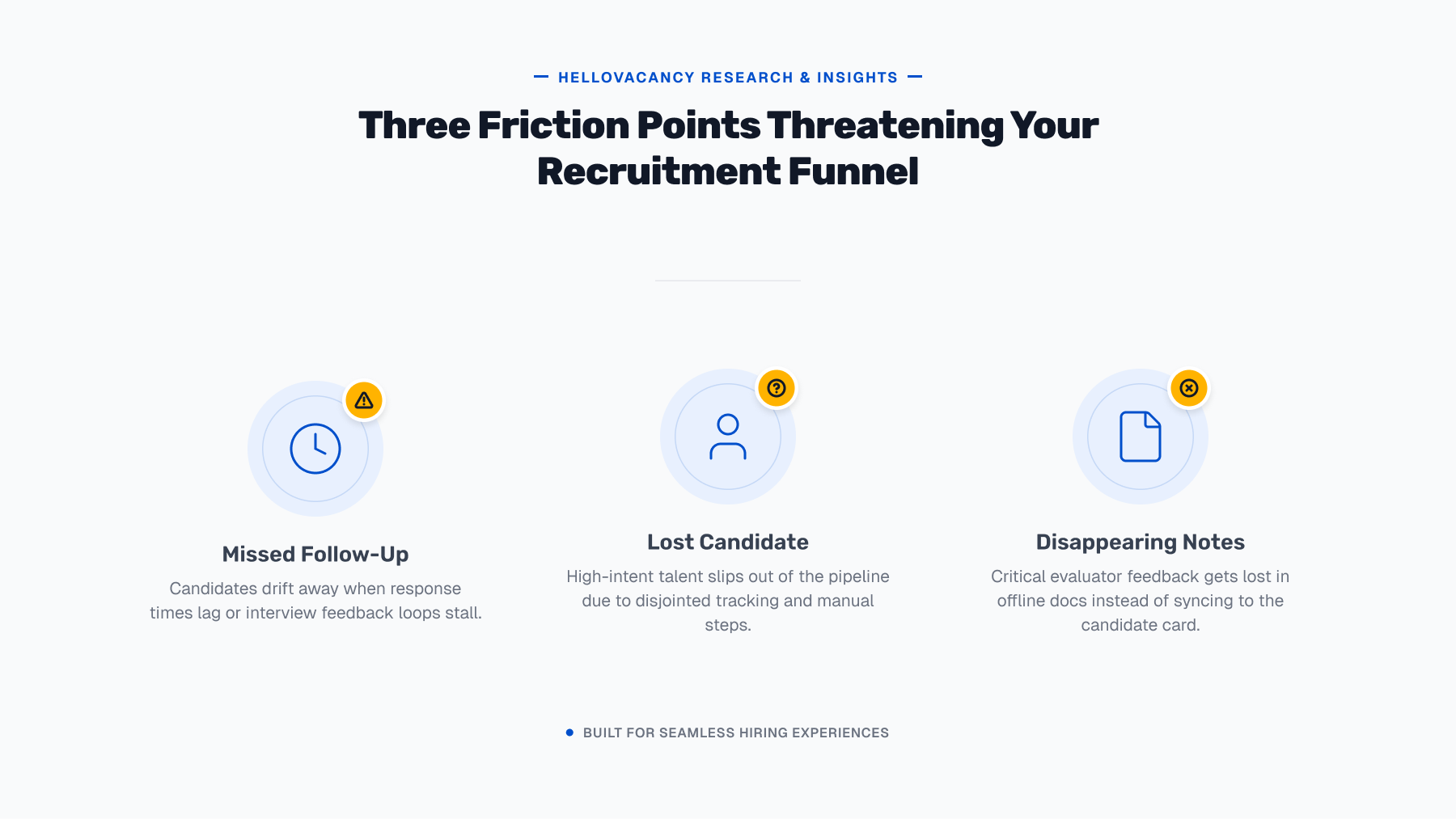
It's not one dramatic failure. It's three small ones that compound:
You lose track of follow-ups. Nothing in a spreadsheet tells you "this candidate has been waiting 6 days for a reply." You find out when they email again, annoyed — or when they don't, and you've lost someone good.
Candidates fall between stages. Was Sarah in "phone screen" or "waiting to schedule"? Different people on your team have different answers, because the spreadsheet has no single source of truth — just whoever edited it last.
Nobody remembers why someone was rejected. Three months later, that candidate applies again. Nobody recalls the conversation, the notes are gone, and you're evaluating them from zero.
What small teams actually switch to
The instinct is to reach for an enterprise ATS — and then bounce off the pricing page. Most of those tools are built for hiring teams of 20+, not a 5-person startup or a 2-person HR function at an NGO.
What actually solves this for a small team is something closer to what a spreadsheet was trying to be in the first place, just built for the job: one place where every application lands automatically (whether it came from your own form, Google Forms, or Typeform), a visual pipeline you can see at a glance, and notes that stay attached to the candidate forever — not lost in someone's inbox.
That's the entire idea behind HelloVacancy's free plan: unlimited jobs, unlimited candidates, unlimited team members, no seat tax, and AI that parses every resume and scores every candidate automatically so you're not the one doing that copy-paste work anymore.
The real signal it's time to switch
You don't need to wait until hiring feels broken. The signal is simpler: the moment you can't answer "where does every open application currently stand" in under 10 seconds", the spreadsheet has already stopped doing its job — you just haven't felt the cost yet.
Start free at hellovacancy.com — no credit card, no seat limits.